Designing a two-sided mentorship platform
Mentor Cycle
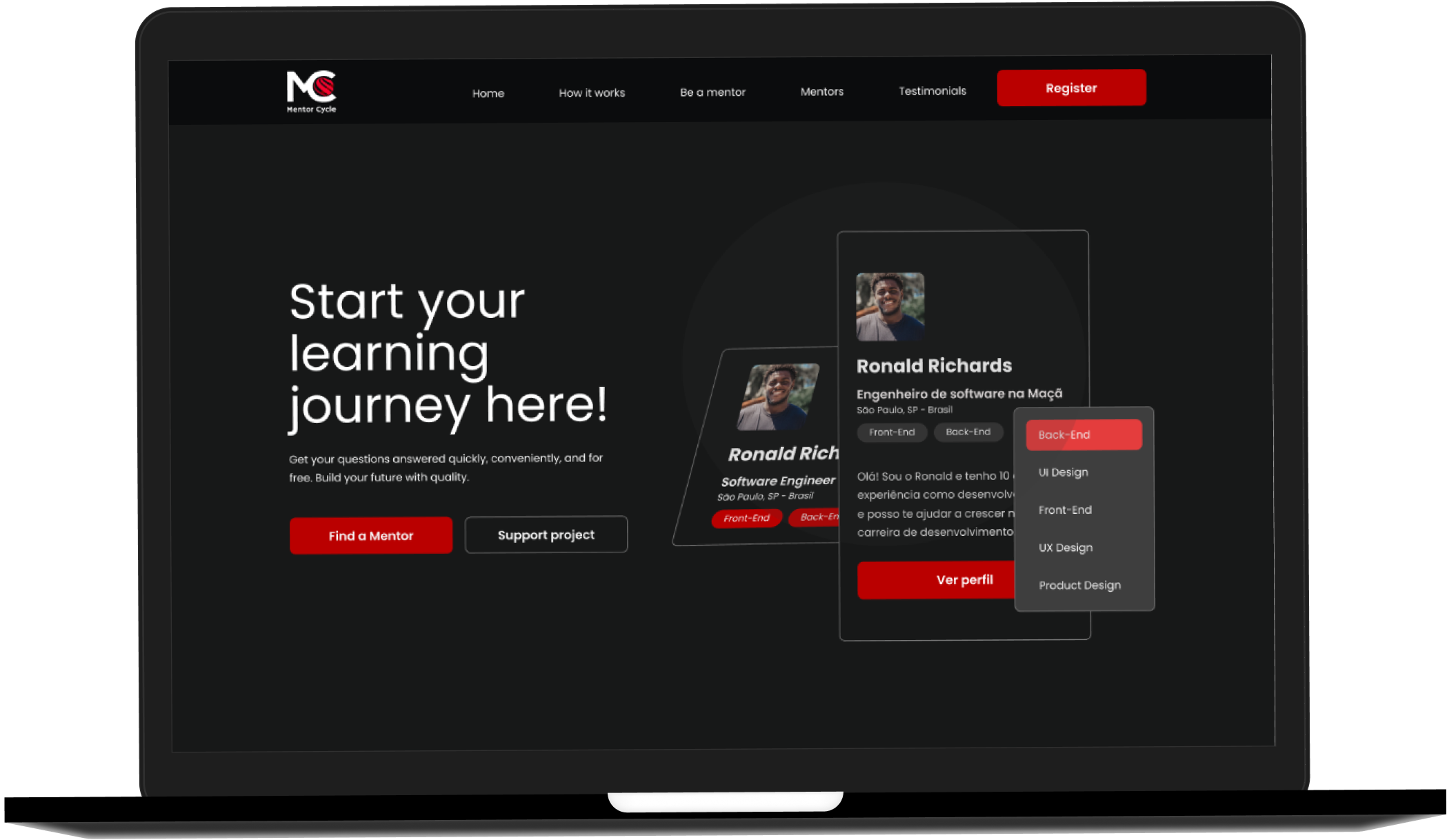
Creating an end-to-end experience for mentors and mentees, from discovery and onboarding to scheduling and managing mentorships.
↓
Role
Product Designer
Project overview
Mentor Cycle is a mentorship platform designed to connect people seeking professional development with mentors willing to share their expertise.
The product needed to support two interconnected experiences: mentees discovering and scheduling mentorships, and mentors managing their profiles, availability and sessions.
I worked across the product lifecycle, from research and journey mapping to user flows, wireframes, interface design and the creation of a reusable design system.
Scope
Product discovery, UX/UI, Interaction design, Design system
Timeline
12 months
Competitive research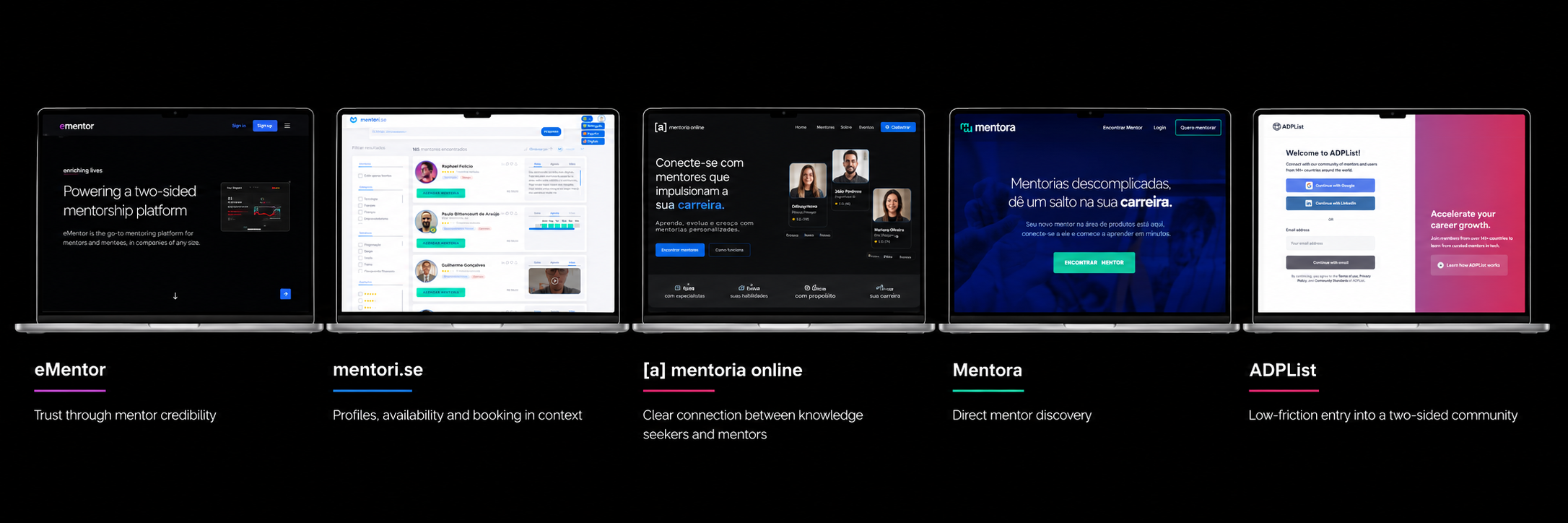
I reviewed mentorship platforms to understand how they approached mentor discovery, profile evaluation, availability, scheduling and the relationship between both sides of the marketplace.
The benchmark showed that mentorship platforms often treat mentor discovery, scheduling and session management as separate parts of the experience. I reframed the opportunity around continuity: helping mentees make confident choices while keeping availability and mentorship states clear for both sides.

Defining the opportunity“How might we connect mentor discovery, availability and session management into one coherent experience for mentees and mentors?”
Mapping the mentorship lifecycle
I mapped the mentee and mentor journeys together to understand where actions on one side affected the experience on the other. This made the shared states — availability, mentorship requests, scheduled sessions and changes — visible before moving into interface design.
Mentee
Discover → Evaluate → Schedule → Manage
Mentor
Build profile → Set availability → Accept requests → Manage
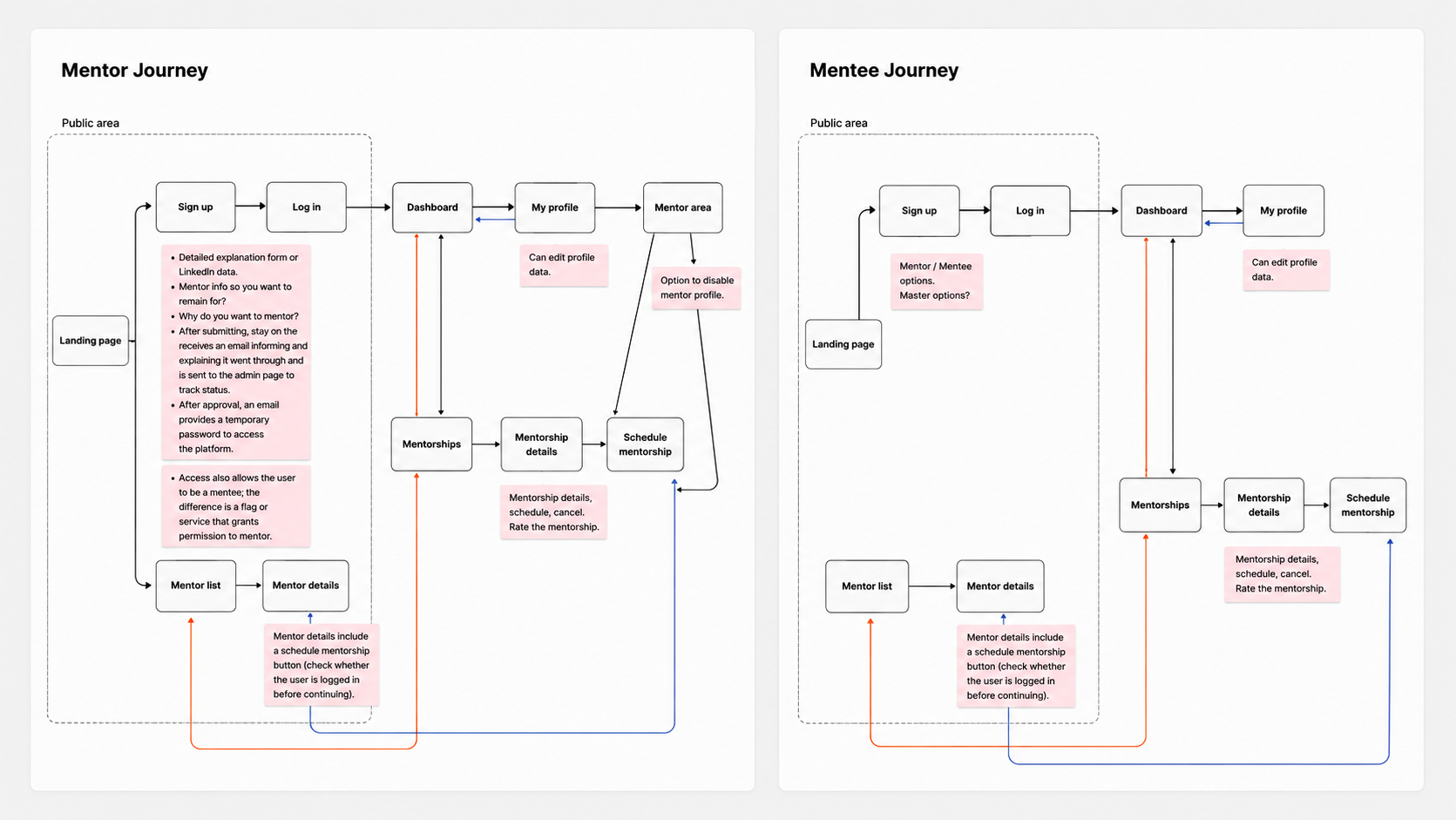
Mapping both journeys together revealed that the experience could not be designed as two independent flows. Availability, requests and mentorship status needed to behave as shared states across the platform.
From shared flows to interface structureWith the mentor and mentee journeys mapped as one connected system, I moved into wireframes to define hierarchy, navigation and the key interactions for each side of the platform.
The goal was to keep both experiences distinct while ensuring that shared states — profiles, availability, mentorship requests and scheduled sessions — remained consistent across the product.
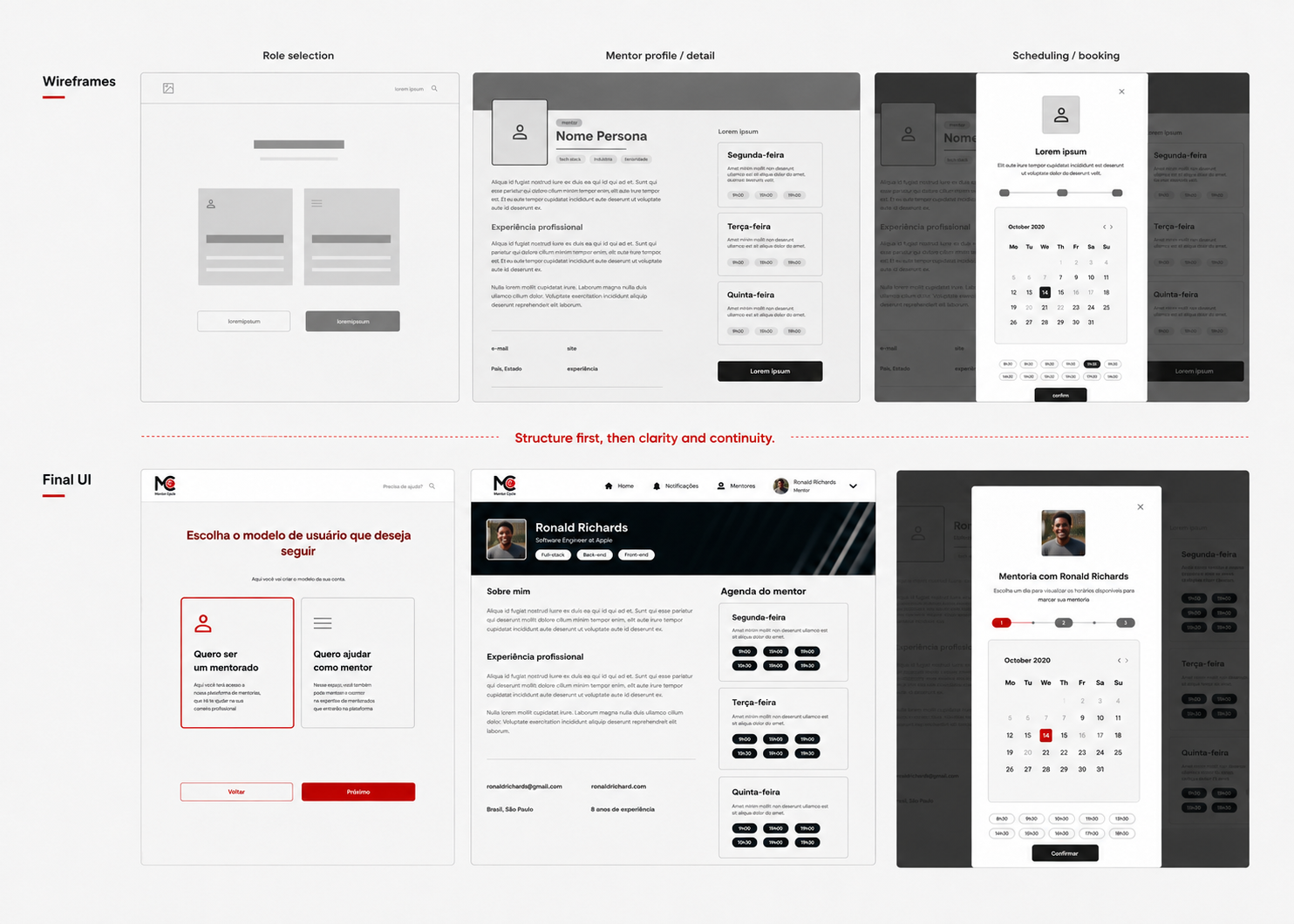
The solutionThe final solution brought the mentor and mentee experiences together as one connected mentorship system, covering discovery, profile evaluation, availability, scheduling and ongoing mentorship management.
Rather than treating each side of the platform as an independent flow, I designed the experience around the states they share — profiles, availability, mentorship requests and scheduled sessions — so actions taken by one user remained clear and consistent for the other.
Role selection and onboarding
Created a clear entry point for users to choose whether they were joining as a mentor or mentee.
Structured each path around the needs and responsibilities of that role from the beginning.
Reduced ambiguity by making the difference between both experiences explicit before account creation.
Mentor discovery and evaluation
Designed mentor profiles to surface the information mentees need to evaluate expertise, fit and credibility.
Connected mentor details with availability so users could understand whether a mentor was a viable option before committing.
Kept discovery, profile evaluation and the next action within the same journey.
Availability and scheduling
Made availability part of mentor selection instead of treating scheduling as a disconnected task.
Designed a focused booking flow for selecting dates and available time slots while preserving the mentor context.
Created clear states for scheduled mentorships so both sides could understand what had been confirmed and what happens next.
Mentor management
Gave mentors a dedicated experience to manage their profile, availability and mentorship sessions.
Connected public profile information with the operational side of the platform, helping mentors keep their availability aligned with what mentees could book.
Designed mentorship management as a shared system rather than separate interfaces for each role.
Across the experience, the goal was to keep both sides distinct enough to support their different needs while making every shared interaction feel like part of the same product.
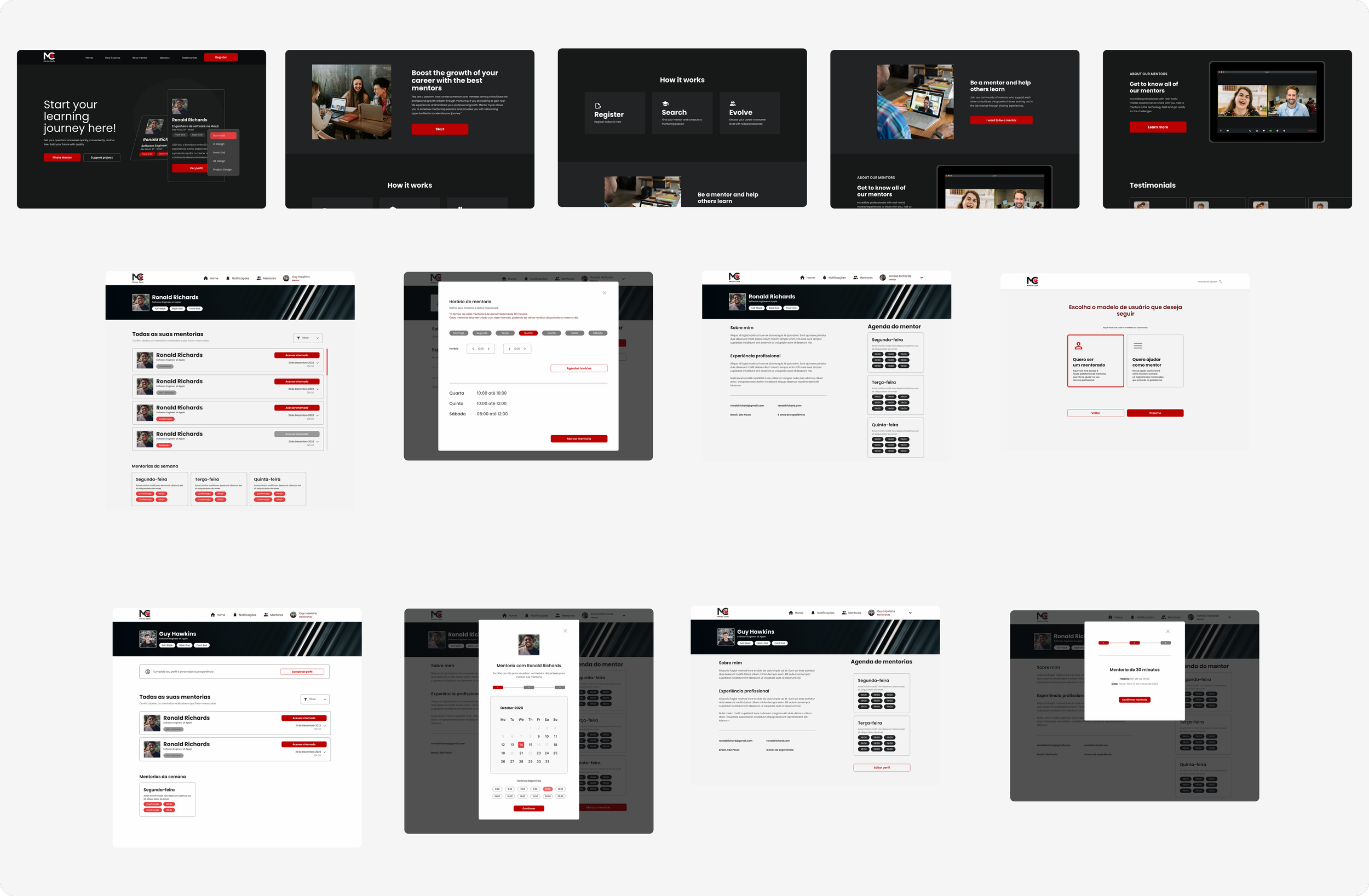
Building a scalable systemBecause Mentor Cycle had to support two interconnected experiences, I created a reusable design system to keep mentor and mentee journeys consistent as the platform expanded across discovery, profiles, scheduling, mentorship management and account states.
The system defined foundations for color, typography, spacing and layout, alongside reusable components for navigation, forms, cards, profiles, progress indicators, menus and scheduling patterns — including light and dark modes.
Design principle: Shared interactions and states should be solved at system level, not recreated independently across each journey.
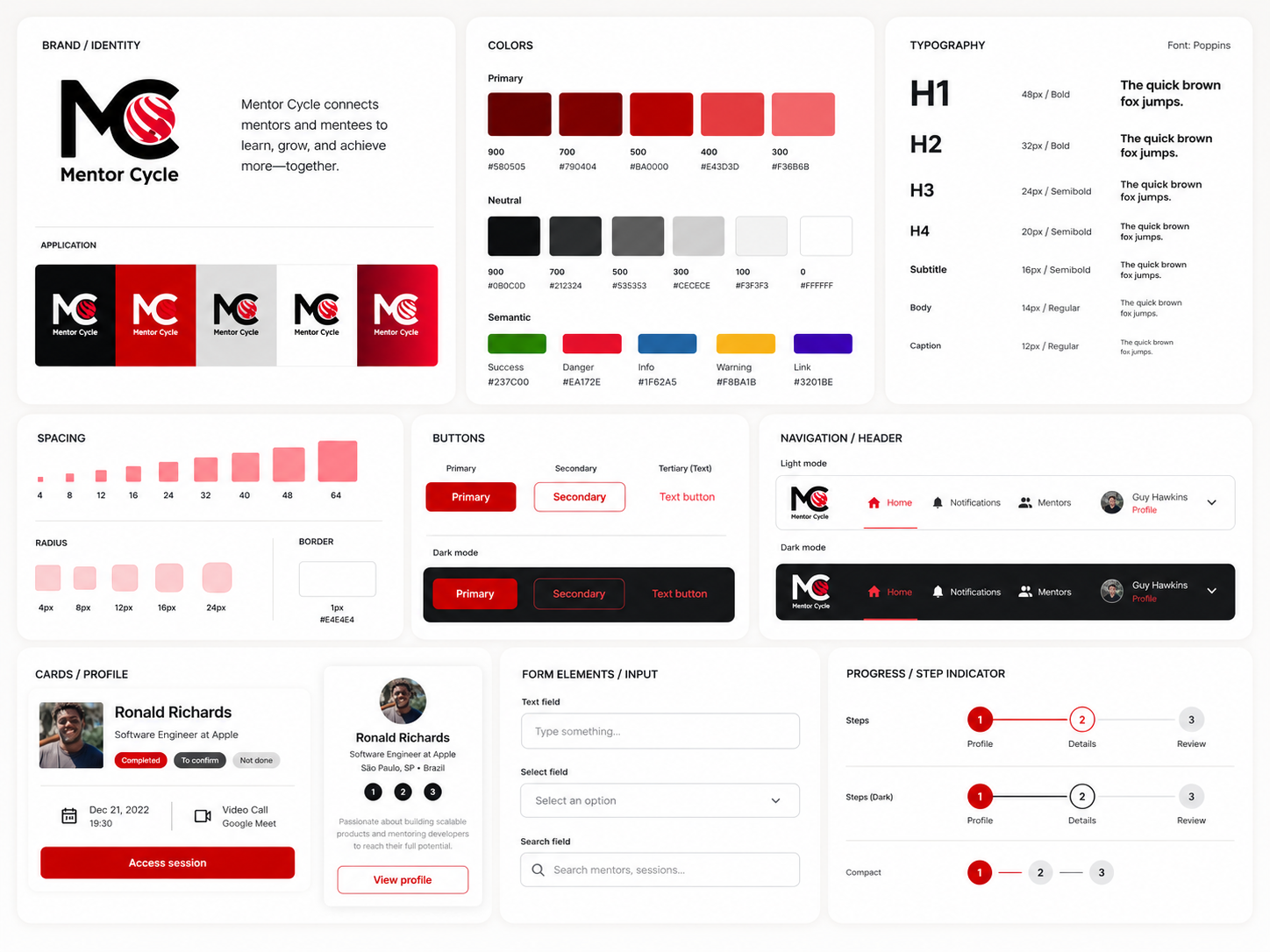
The end-to-end experience
Results and Next StepsThe initial release provided early signals of adoption across both sides of the platform.
1,000+ users registered after launch
Adoption across both sides of the platform: mentors and mentees
CSAT reached 7/10 in the initial release
The launch provided an initial signal of product adoption and created a real user base for continuous research and iteration. And, with the product live, the next phase would focus on understanding how people actually use the platform and where the experience can be improved.
Run usability studies with mentors and mentees.
Track the funnel from registration to completed mentorship.
Measure activation and retention separately for each side.
Investigate match quality and scheduling drop-off to prioritize future iterations.
Team
Design
Thiago Castro: Product Design Lead
Flavia Foiato: Product Designer
Nara Oliveira: UX Researcher
Antônio Conceição: UX Designer
Stakeholders
Bianca Karoline: Co-founder
Leonardo Balsalobre: Co-founder