Mentor Cycle
↓
Designing a two-sided mentorship platform
Creating an end-to-end experience for mentors and mentees, from discovery and onboarding to scheduling and managing mentorships.
Role
Product Designer
Scope
Product discovery
UX/UI
Interaction design
Design system
Timeline
12 months
Project overview
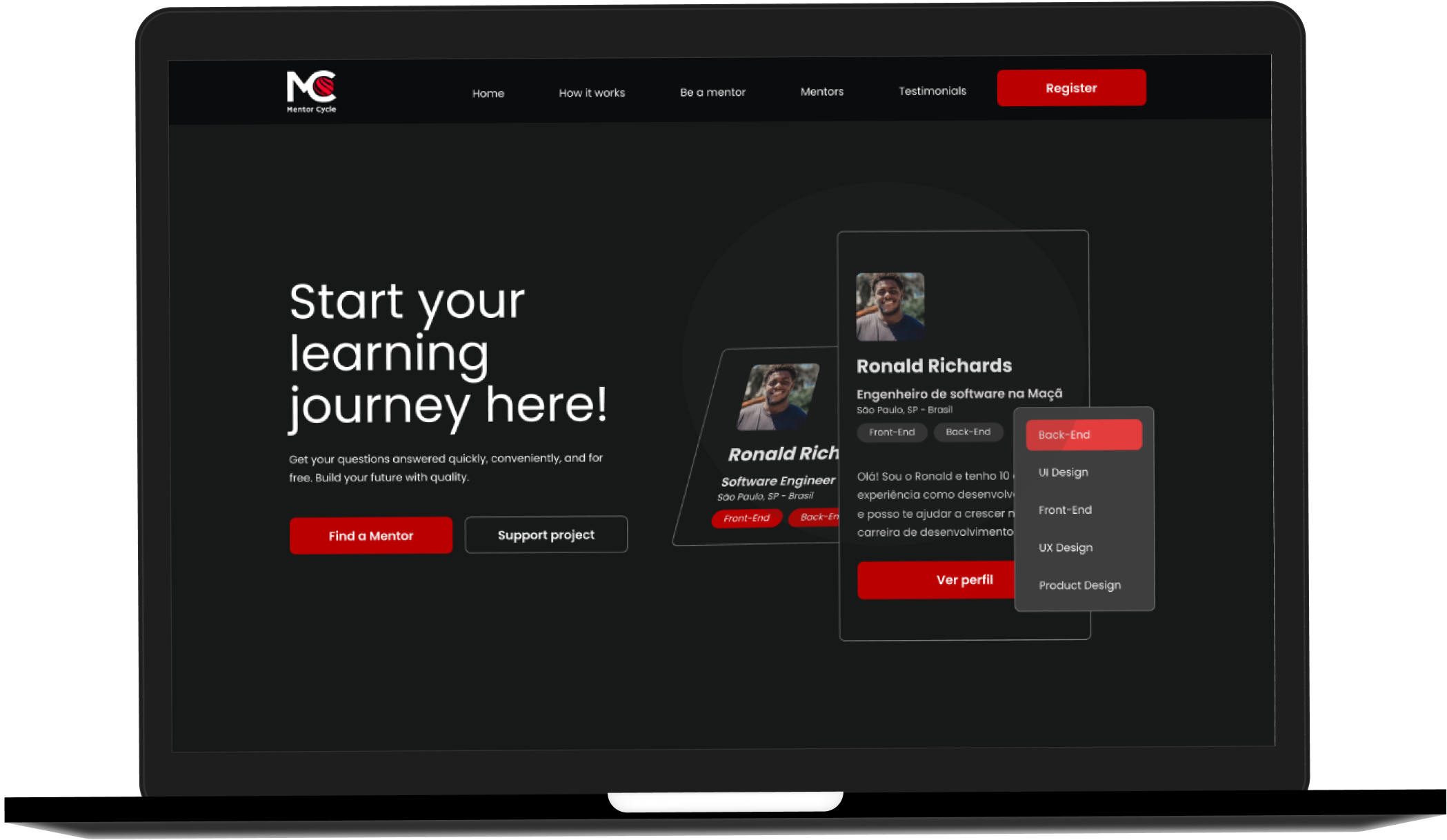
Mentor Cycle is a mentorship platform designed to connect people seeking professional development with mentors willing to share their expertise.
The product needed to support two interconnected experiences: mentees discovering and scheduling mentorships, and mentors managing their profiles, availability and sessions.
I worked across the product lifecycle, from research and journey mapping to user flows, wireframes, interface design and the creation of a reusable design system.
Understanding a two-sided platformDesigning Mentor Cycle meant understanding two experiences that depend on each other. Mentees needed to discover the right mentor and schedule a session with confidence, while mentors needed an efficient way to manage their profile, availability and mentorships.
Mentee
Find a mentor
Evaluate profiles
Schedule a mentorship
Manage sessions
Two users. One connected experience.
Mentor
Build a profile
Set availability
Receive mentorships
Manage sessions
Step 1 - Product DiscoveryBefore producing content for the landing page, we conducted a desk research to better understand both Mentor Cycle’s context and the mentorship market in general. I analyzed everything the team had done up until that point and mapped the current experience of both mentors and mentees. This research helped create initial personas and supported our strategic content and design decisions later on.
Desk Research

Benchmark
To guide the content and design of the landing page, we analyzed mentorship platforms such as ADPList, Awari, Talkstars, and others.
The goal was to understand how leading platforms structure their flows and present key information to attract mentors and mentees.
We focused on 3 pillars:
User flow and Feature mapping
Profile structure and Role switching
Positioning and Communication

Step 2 - Definition"How might we turn the Mentor Cycle landing page into a conversion point for mentees, while also attracting new mentors, with a consistent, accessible, and purpose-driven tone of voice?”
Step 3 - Ideation Mapping the landing page content
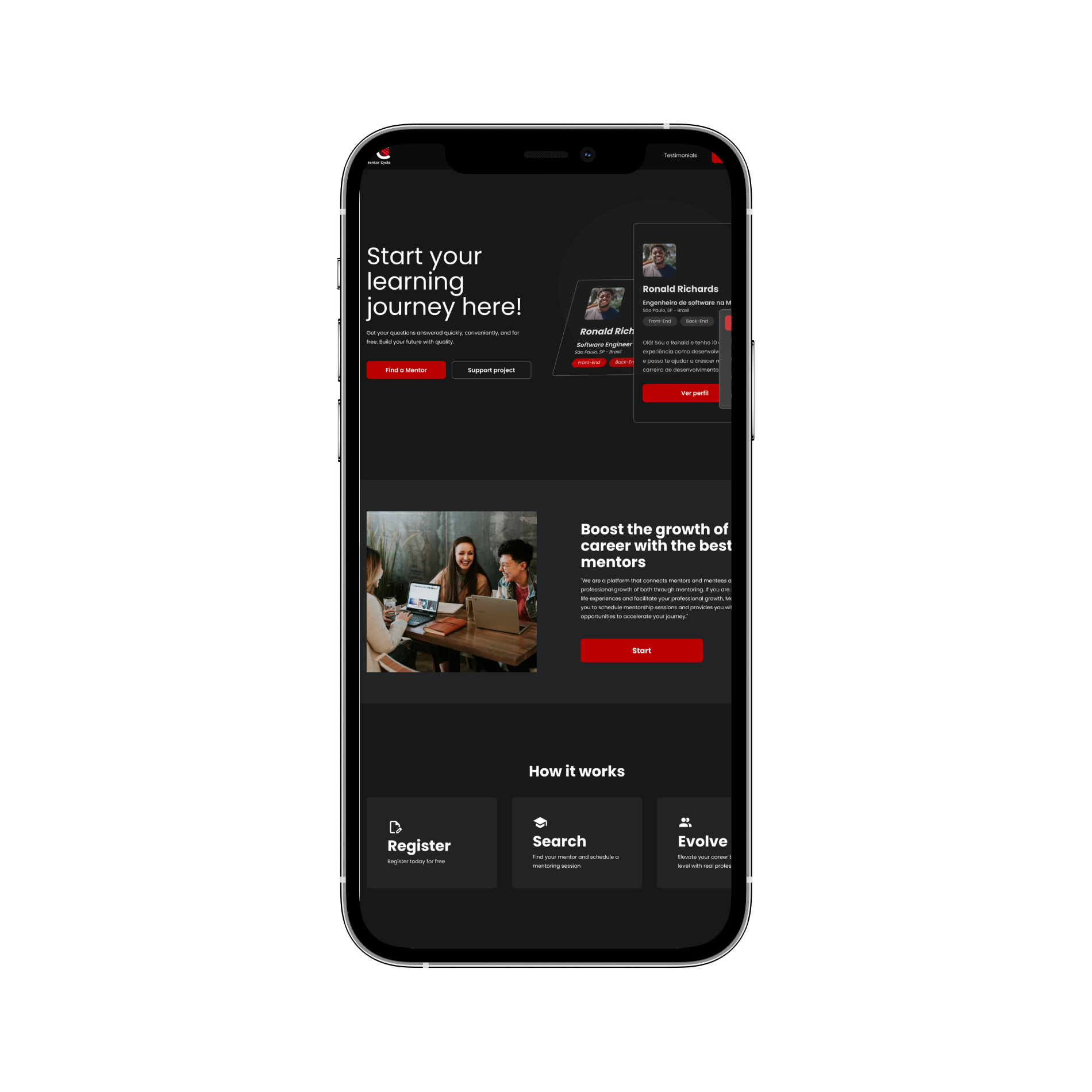
Based on the research, personas, and benchmarking, we defined what information should be included on the landing page. The key content areas were:
Introduction to mentors
How the platform works
How to become a mentor
FAQ with clear information
Calls to action to sign up (as mentor or mentee)
Content Strategy
Mentor Cycle didn’t have a tone of voice guide when I joined the team. I was responsible for defining the platform’s tone based on the audience and purpose, ensuring all the content followed this voice, motivational, direct, and inclusive.
I wrote the entire landing page, including:
Titles and subtitles
Explanatory sections for both audiences
Buttons and CTAs
FAQ answers with accessible language
Microcopy for interaction and navigation

Step 4 - DeliveryDelivered Mentor Cycle’s first landing page, establishing the platform’s voice and guiding users toward meaningful actions. The content was designed to be clear, welcoming, and supportive, reflecting the platform’s mission and values while addressing both mentees and mentors.
Key outcomes included:
End-to-end content creation, including titles, subtitles, explanatory sections, CTAs, FAQ answers, and microcopy for navigation.
Defined and applied a consistent tone of voice, ensuring messaging was motivational, inclusive, and aligned with user needs.
Structured content strategy that guided users through key touchpoints, from understanding the platform to signing up as a mentee or mentor.
Enhanced conversion and engagement, transforming the landing page into a key entry point for users while building trust and credibility for the platform.
The result was a cohesive, user-centered experience that combined brand storytelling, accessibility, and action-driven copy, laying the foundation for Mentor Cycle’s digital presence.
Team
Design
Thiago Castro: Product Design Lead
Flavia Foiato: Product Writer
Nara Oliveira: UX Researcher
Antônio Conceição: UX Designer
Stakeholders
Bianca Karoline: Co-founder
Leonardo Balsalobre: Co-founder