Carely
Designing a healthcare appointment experience from the ground up
Prototyping · Design system · UX/UI · Content Design
↓
Role
Product Designer
Project overview
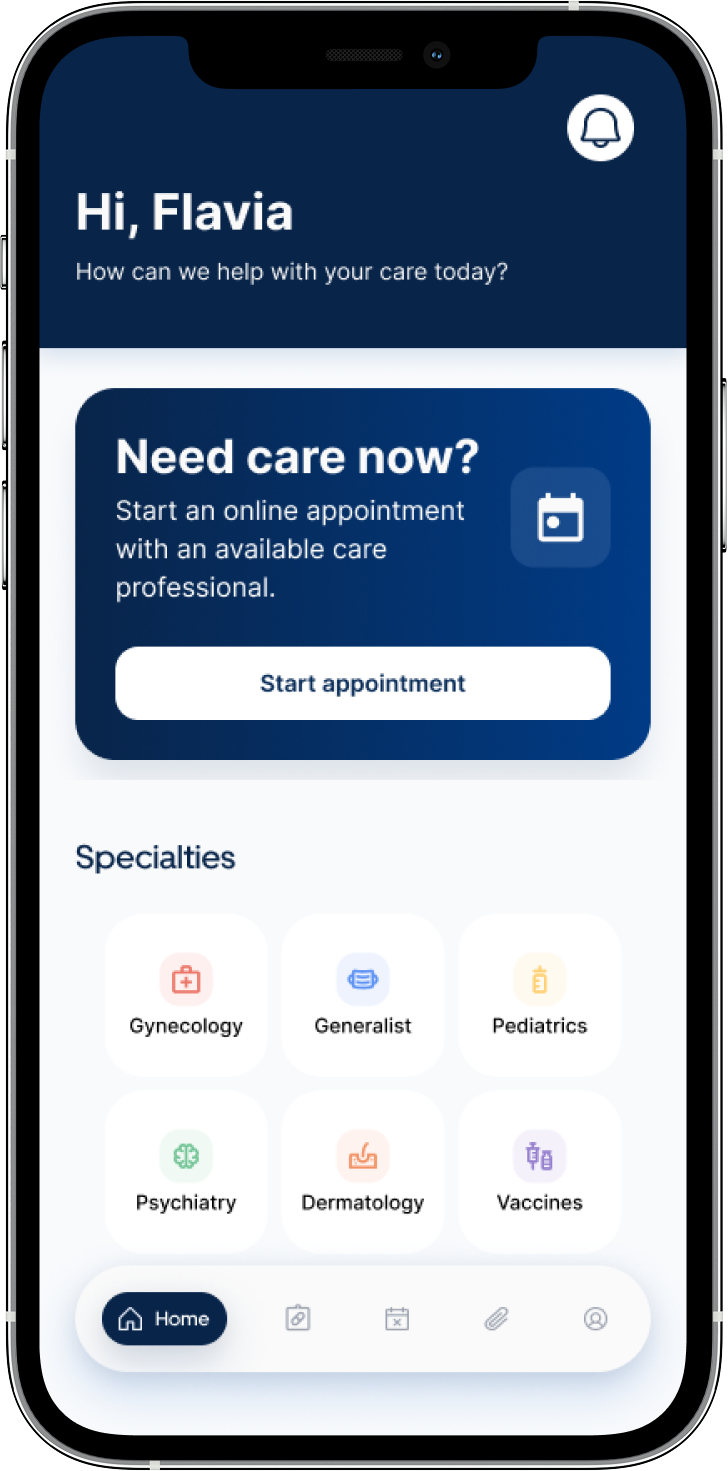
Carely is a healthcare appointment app I designed from the ground up, covering the full journey from finding a healthcare professional and booking an appointment to managing, cancelling, and rescheduling care.
While designing the broader product experience, I chose to focus on cancellation as a critical moment in the patient journey. When a healthcare professional cancels an appointment, users need to understand what happened, find another available option, and know what happens to payment, insurance, or refunds.
This became the journey I explored in greater depth: how could Carely help patients recover from a cancellation and continue their care without having to start the process over?
Scope
Design system, Research, Content Design
Timeline
12 months
Competitive research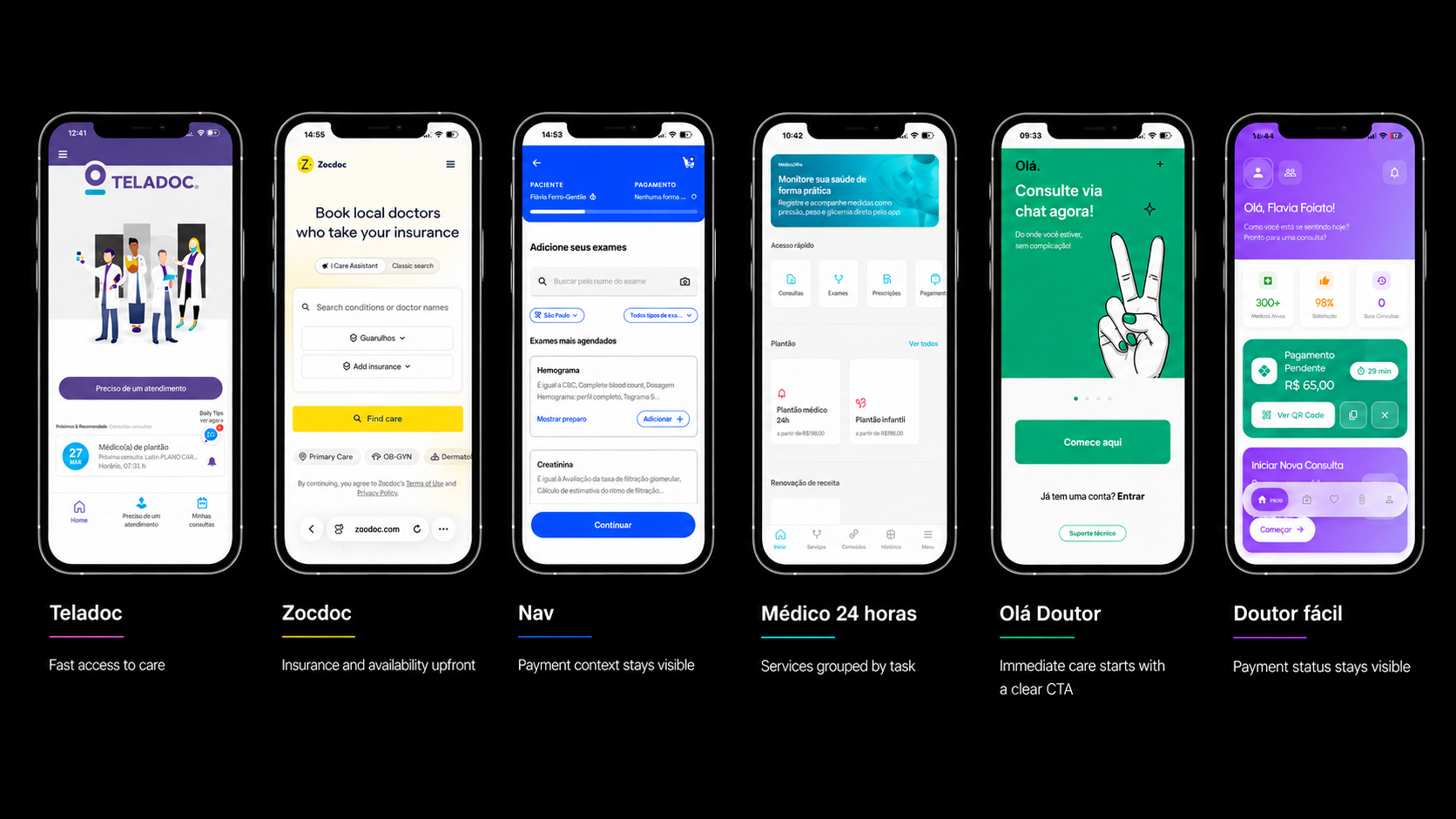
Before defining Carely’s appointment experience, I reviewed Brazilian and US healthcare products to understand how they handle availability, payment or insurance, appointment status, cancellation, and rescheduling.
I compared Zocdoc, Teladoc, NAV, and Hapvida/NotreDame to identify recurring patterns and gaps that could inform the product.

The benchmark showed that cancellation and rescheduling are often treated as separate actions. I reframed the problem around recovery: helping patients understand what changed and continue their care with as little repetition as possible.
Defining the opportunity“How might we help patients recover from a cancelled appointment without having to start over?”
Rescheduling couldn’t be designed in isolationDesigning a better rescheduling experience required decisions across the entire appointment journey. I first needed to define how patients find care, choose a professional, select a date and time, confirm an appointment, manage its status, and recover when plans change.
Appointment lifecycle
Booking Management Recovery
Find care Manage appointment
Choose a professional
Select date & time
Confirm appointment
Appointment cancelled
Reschedule
New confirmation
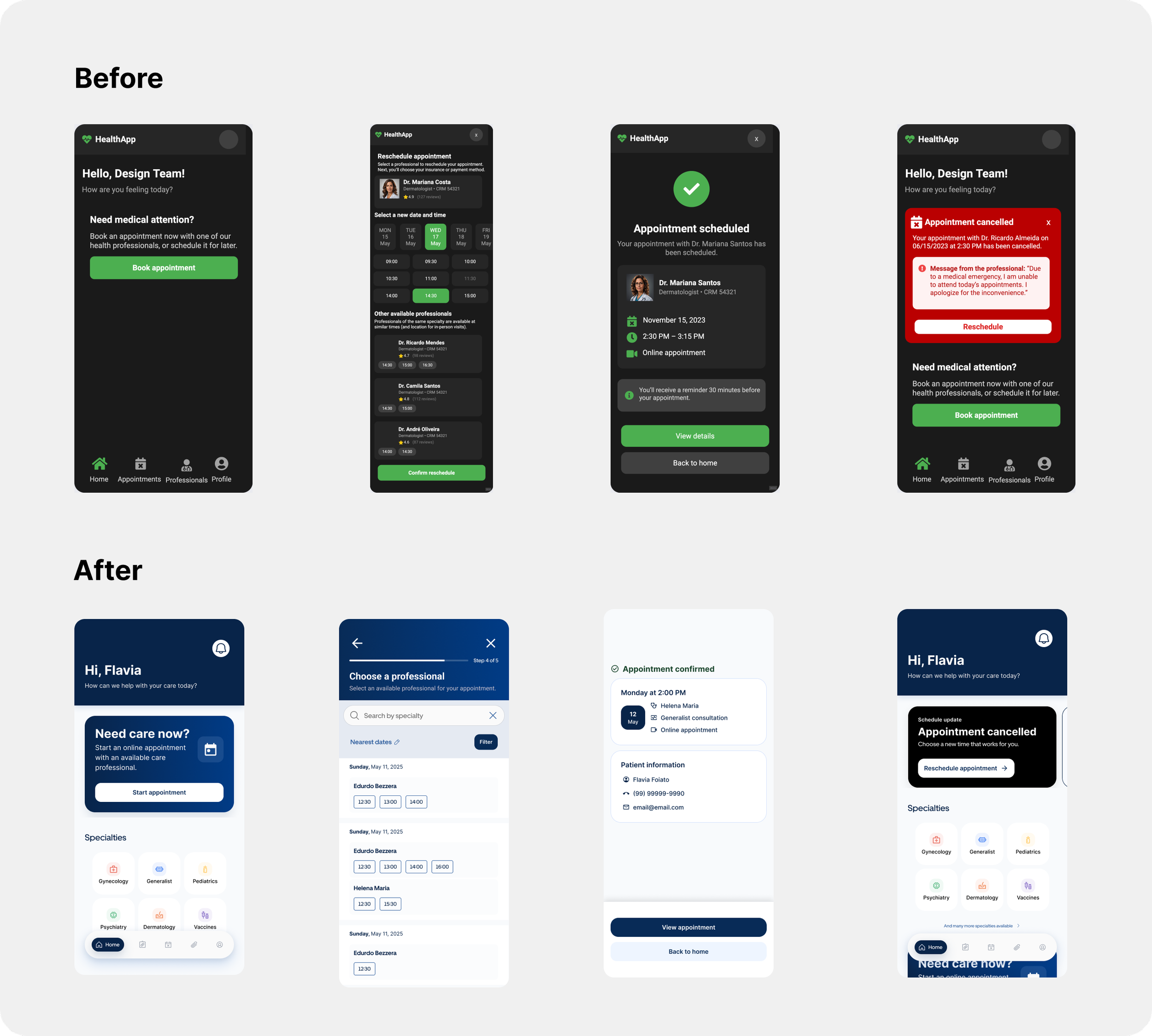
From early concept to final directionEarly explorations treated cancellation and rescheduling as functional steps. As the journey evolved, I simplified the experience around continuity: clearer hierarchy, visible availability, a more explicit next action, and a consistent system across booking and recovery.
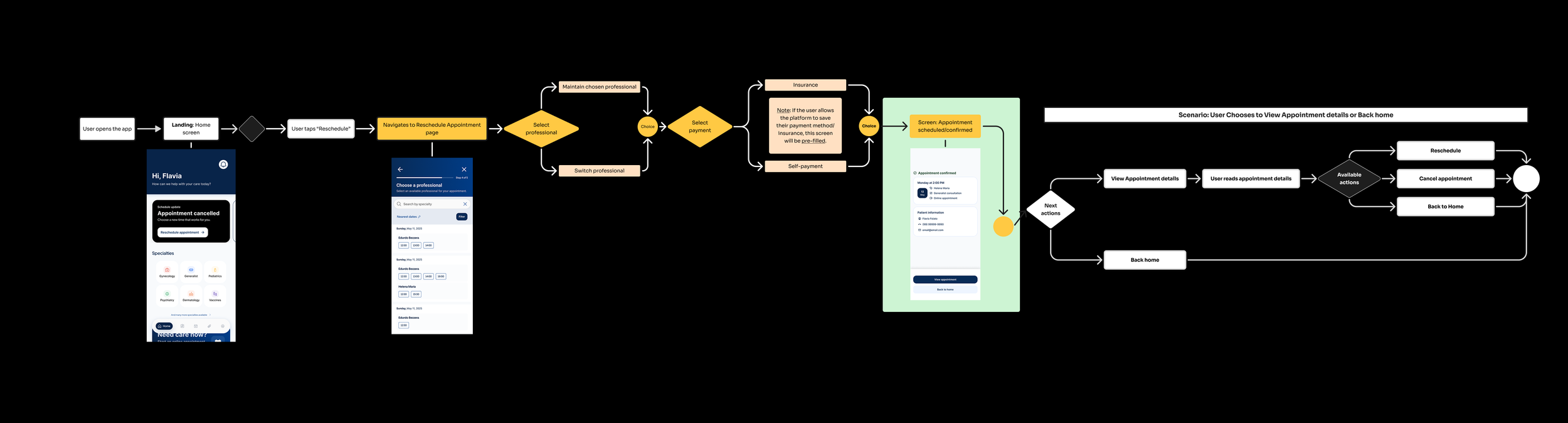
Mapping the recovery flowI mapped the end-to-end recovery flow to understand how cancellation, rescheduling, payment, confirmation, and next actions needed to connect.
The solutionThe final solution connected the appointment experience from the first interaction with Carely through booking, payment, appointment management, and recovery after cancellation.
Rather than designing each moment as an isolated flow, I focused on helping patients understand where they are, what information matters, and what they can do next.
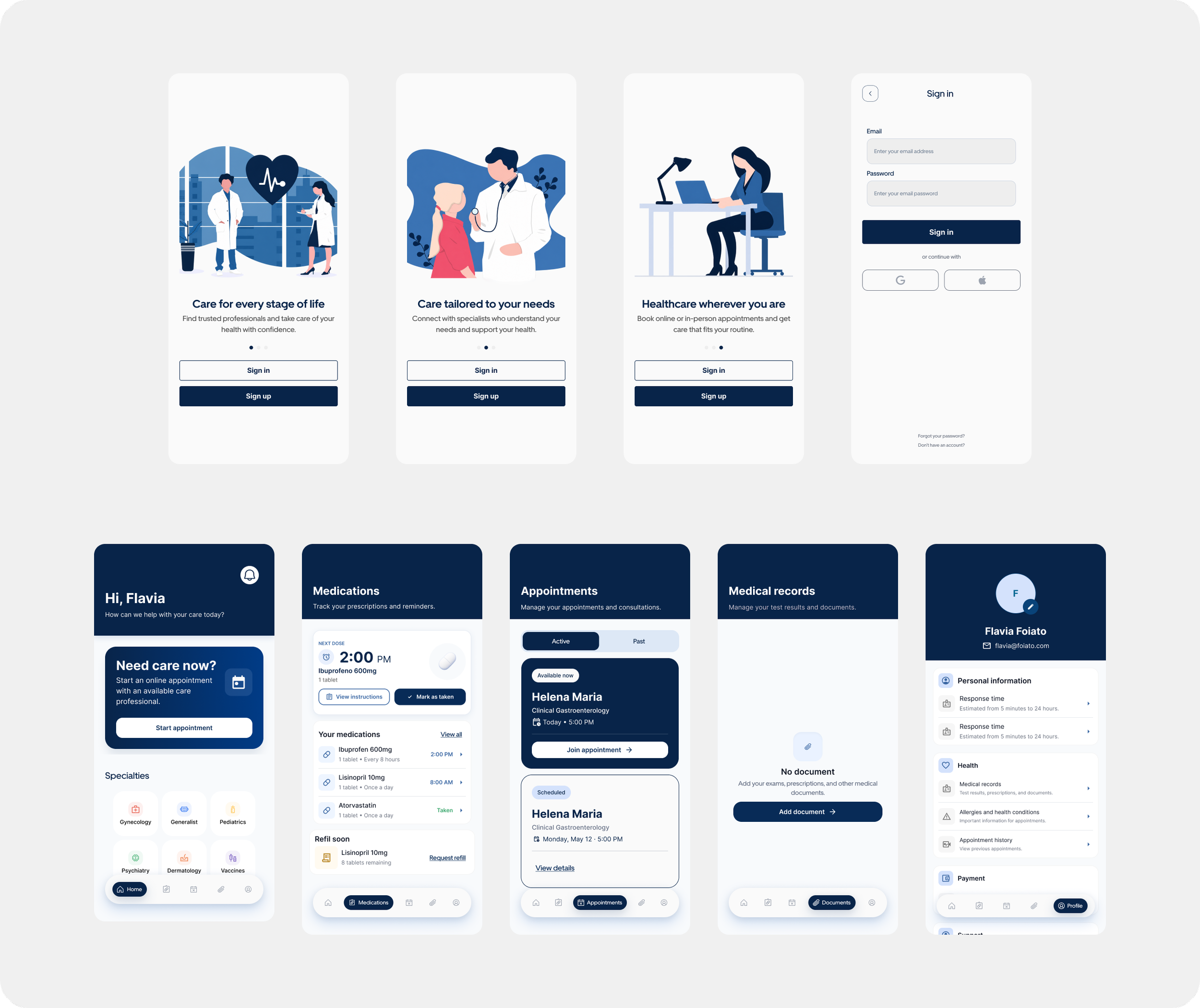
Onboarding
Introduced Carely through three short value propositions focused on access to trusted care, personalized support, and flexible appointment options.
Kept the experience lightweight, allowing patients to understand the product before deciding to sign in or create an account.
Used clear, benefit-led messaging instead of explaining features or product mechanics.
Finding care and availability
Made availability part of the provider-selection decision, surfacing dates and times alongside professional options.
Created a generalist path for patients who do not know which specialty they need while keeping specialty search available.
Reduced the amount of information patients need to evaluate sequentially before choosing care.
Payment and confirmation
Kept professional, consultation, date, time, and cost information connected throughout payment.
Supported different payment methods without separating the transaction from the appointment context.
Designed confirmation as a clear next state, giving patients a record of what was booked and direct access to appointment management.
Cancellation and recovery
Treated cancellation as a transition, not an endpoint.
Made rescheduling the primary next action after a professional cancels an appointment.
Preserved appointment context so patients could continue from cancellation to a new confirmed appointment without restarting the search.
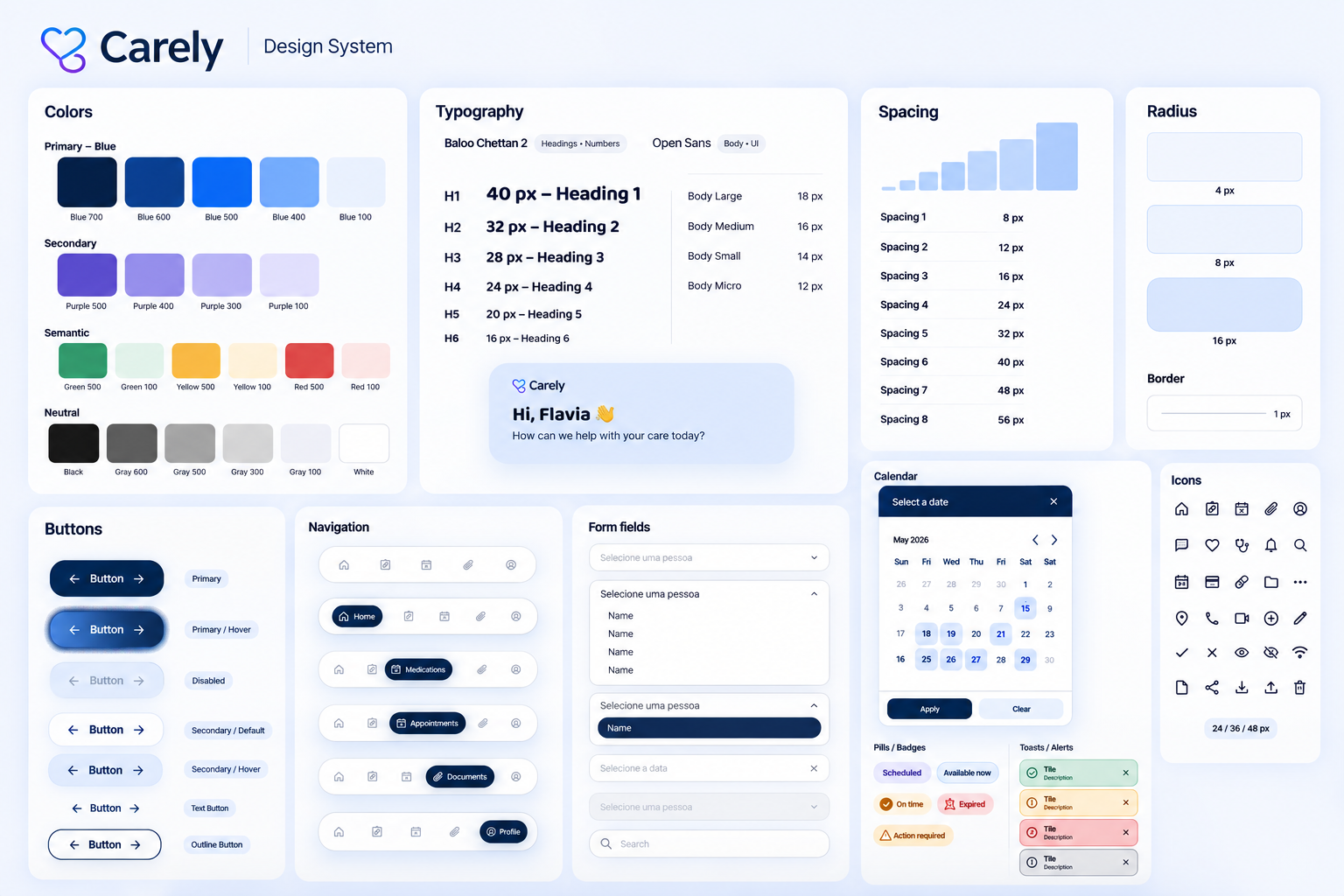
Building a scalable systemBecause Carely was designed from the ground up, I created a reusable design system to keep the experience consistent as the product expanded across booking, payments, appointment management and recovery.
The system established foundations for color, typography, spacing and accessibility, alongside reusable patterns for navigation, forms, buttons, status indicators, alerts and appointment-related components.
Design principle: New journeys should be built from shared patterns rather than solved screen by screen.
The resultsThe redesigned recovery flow made it significantly easier for patients to continue their care after a cancellation.
Rescheduling completion increased from 20% to 70%.
Abandonment after cancellation dropped from 80% to 30%.
Post-task satisfaction increased from 6/10 to 8/10.
Participants were more likely to understand what had changed and what action they could take next.
The biggest shift came from treating cancellation as part of the appointment journey rather than as an endpoint. Keeping the appointment context visible and surfacing rescheduling as the primary next action reduced the need for patients to restart the process.
The end-to-end experience
Challenges & LearningsDesigning the full appointment lifecycle while focusing on cancellation created an important scope challenge. Booking, availability, payment, appointment management, and recovery are closely connected, but trying to validate every part of the experience at the same depth would have diluted the testing. Focusing each iteration on the decisions most critical to recovery helped keep the process more focused and actionable.
Another key learning was that cancellation could not be evaluated as an isolated screen. Patients needed enough context before and after the event to understand what had changed, what would happen to their appointment, and what they could do next. Testing recovery as an end-to-end scenario — from cancellation to a new confirmation — provided a much clearer view of whether the experience actually supported continuity of care.
Because Carely was developed as a product concept, some real-world variables such as provider availability, insurance rules, refunds, and notification delivery could only be represented in the prototype. A next step would be to validate these flows with real operational constraints and measure how effectively patients recover from cancelled appointments in a live environment.
The project reinforced that continuity of care is not created by a single screen, but by keeping context, decisions, and next actions connected across the entire journey.
Next StepsThe next step is to validate the recovery journey with users through usability testing, focusing on whether patients can understand what changed, identify their available options, and successfully reschedule without restarting the process.
The findings would help prioritize the next iterations of Carely, particularly around:
Test the cancellation-to-rescheduling journey with users, measuring comprehension, task completion, confidence, and points of friction.
Validate how payment, insurance, and refund information should appear after a cancellation, especially when the new appointment has different conditions.
Explore notification and re-entry experiences across push, email, and messaging so patients can return directly to the appropriate next action.
Test different availability scenarios, including keeping the same professional, choosing another professional, and cases where no immediate availability exists.
Validate the experience against real operational constraints, such as provider availability, cancellation policies, insurance rules, and payment processing.
Define product metrics for the recovery journey, including rescheduling rate, abandonment rate, time to rebook, task success, and CSAT.